How Digitalization Improves Decision-Making in International Transportation
For many years, a large part of the decisions made within international transportation operations were reactive. Issues were managed after they had already occurred, and much of the operation depended on experience, intuition, or the ability of teams to respond to regulatory changes, transit delays, or customs incidents.
Today, digitalization is completely transforming that way of working. The incorporation of real-time data, connected platforms, and predictive analytics tools allows freight forwarders and companies to make decisions that are much faster, more accurate, and better adapted to an increasingly complex international environment.
In a context marked by globalization, regulatory changes, and supply chain volatility, having visibility and the ability to anticipate events has become a strategic factor in ensuring operational efficiency.
From Reactive Logistics to Predictive Logistics
One of the main changes brought by digitalization is the ability to anticipate potential issues before they impact an international operation.
Thanks to the analysis of historical data, demand patterns, port congestion, transit times, weather conditions, and customs incidents, freight forwarders can identify potential risks and plan each shipment more accurately.
This makes it possible to react earlier to potential delays, route changes, or incidents that could affect an import or export operation.
The Importance of Real-Time Visibility
Uncertainty remains one of the biggest challenges in international transportation.
For this reason, technologies such as IoT, GPS, and cloud-based platforms are enabling access to updated information on the location and status of goods throughout the entire logistics process.
For a freight forwarder, having real-time visibility of a sea freight or air freight operation is essential to anticipate issues, coordinate all stakeholders involved, and keep customers informed at all times.
A port delay, a change in a vessel’s schedule, an air freight disruption, or a modification in a customs process can be managed much earlier when the entire supply chain has access to updated and shared information.
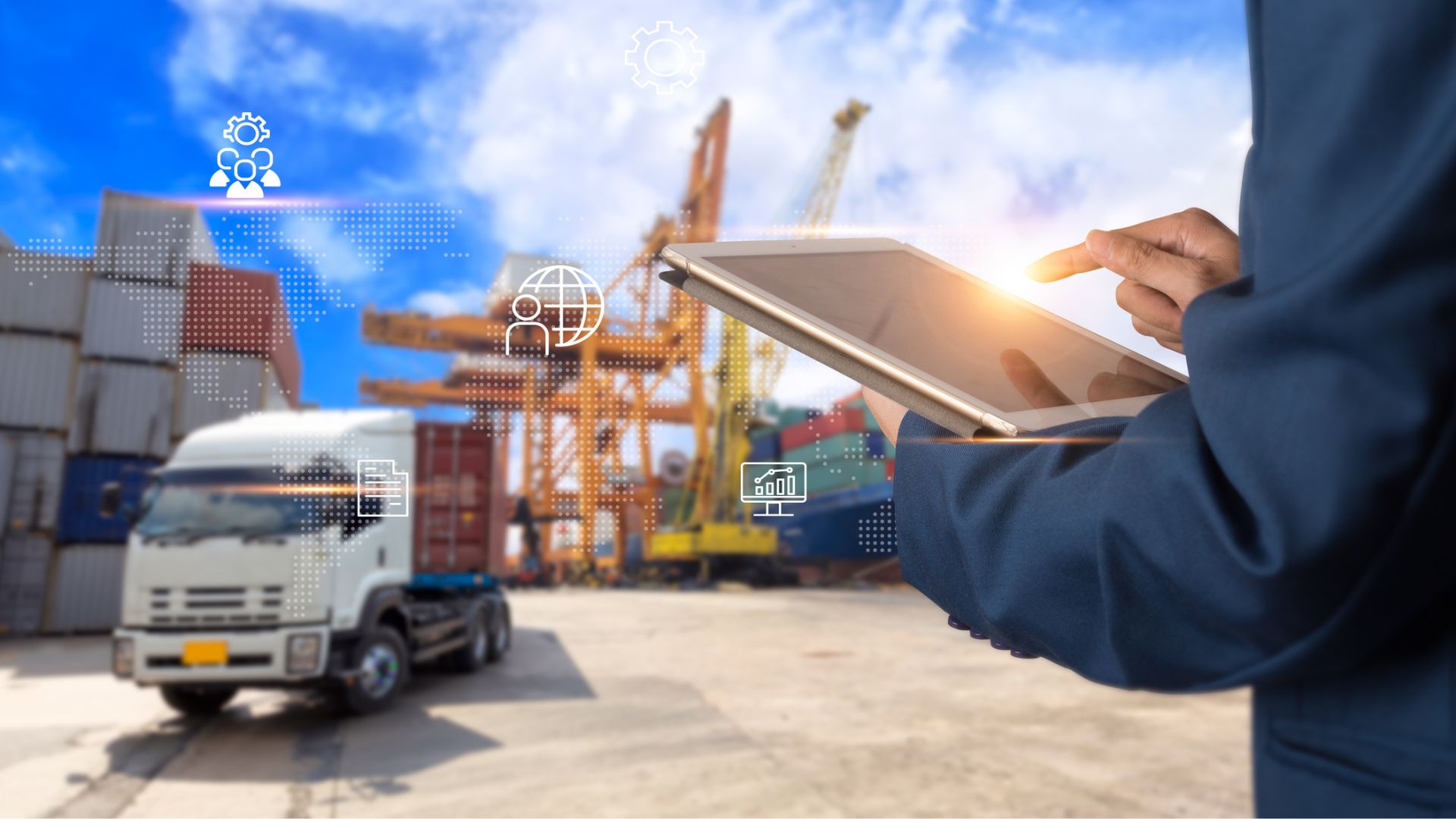
At Logisber, tools such as our Logisber NEO platform allow customers to monitor their sea and air freight operations in real time, providing a centralized view of the status of every international shipment.
Data-Driven Decisions
Digitalization is also driving a management approach that is increasingly focused on data analysis.
Factors such as transit times by route, port and airport performance, customs incidents, operating costs, and service levels can now be measured with much greater accuracy, allowing every logistics decision to be optimized based on real information.
This analytical capability makes it easier to select the best routes, anticipate potential bottlenecks, and improve the planning of future international operations.
Automation and Operational Agility
Many administrative tasks associated with international trade can now be managed more efficiently thanks to digitalization.
Document automation, system integration, and the electronic management of certain processes help reduce response times and minimize operational errors.
This does not eliminate the importance of people within the logistics chain.
Instead, it allows teams to focus on higher-value strategic decisions and on managing incidents that require experience, judgment, and adaptability.
A More Connected Supply Chain
The integration of ERP platforms, logistics management systems, tracking tools, and customs solutions allows information to be shared much more smoothly among all parties involved in an international operation.
For a freight forwarder, connectivity between shipping lines, airlines, customs brokers, logistics operators, and customers is essential to ensure efficient coordination throughout the entire process.
The greater the connectivity within the supply chain, the greater the ability to make consistent and coordinated decisions.
Digitalization and Logistics Sustainability
Technology is also having a significant impact on the sustainability of international operations.
Route optimization, improved cargo utilization, and the reduction of unnecessary movements help decrease transportation-related consumption and emissions.
In addition, digital tools make it easier to measure indicators related to energy efficiency and carbon footprint, helping companies make more sustainable decisions based on real data.
Technology and Adaptability
International transportation operates in an increasingly dynamic and demanding environment. Regulatory changes, new customs requirements, geopolitical tensions, and market disruptions require companies to adapt continuously.
Digitalization makes it possible to respond more quickly, with greater visibility and analytical capabilities, to these types of challenges.
However, technology alone does not solve every challenge. Experience, knowledge of international trade, and coordination capabilities remain essential for correctly interpreting data and making effective decisions.
At Logisber, we combine technology, operational visibility, and expertise in international transportation and customs management to help our customers make better decisions at every stage of their supply chain. Because behind every import or export there is not just cargo in motion, but an operation that requires coordination, control, and the ability to anticipate.
Contact our team and discover how we can help you optimize your international operations.
Categorías
Compartir