Why trust is the most valuable asset in international logistics
In international logistics, every operation involves much more than moving goods from one point to another. Behind each shipment there are strategic decisions, commercial commitments, and business expectations that depend on everything working as planned, within a complex environment where multiple stakeholders, changing regulations, and external factors that are difficult to predict all come into play. Port delays, customs inspections, or documentation issues are part of the day-to-day.
In this context, trust becomes a key element that determines the outcome of the entire logistics chain.
Trust is built from the origin
Before the goods even move, the success of the operation is already being defined. The choice of Incoterm, the correct tariff classification, document preparation, or route planning all shape the entire process.
An imprecise decision at this stage can lead to later bottlenecks or deviations in costs and timelines. On the other hand, well-developed planning makes it possible to anticipate scenarios, reduce risks, and move forward with greater control.
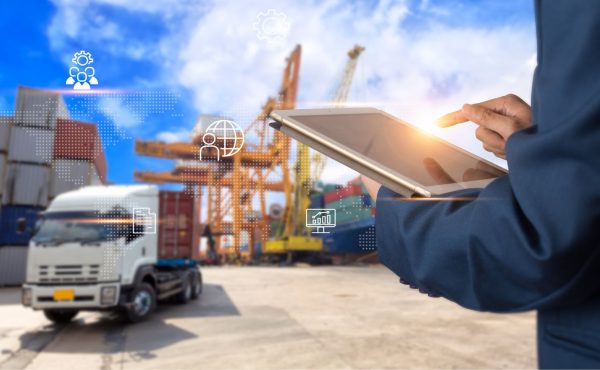
But trust does not rely only on initial planning. It also depends on the ability to maintain control throughout the entire operation. In this sense, having tools that provide real visibility makes a difference. At Logisber, this translates into solutions such as Logisber NEO, a real-time tracking platform that allows you to check shipment status, access documentation, and have a complete view of each operation. This traceability strengthens decision-making and reduces uncertainty from the start through final delivery.
Real coordination across the entire chain
A logistics operation does not work as a sum of isolated phases. Transport, customs, storage, and final delivery are part of the same system that must remain connected.
When this coordination fails, blind spots appear that directly affect the outcome. Maintaining constant communication, aligning all stakeholders, and anticipating issues makes it possible to operate more efficiently and reinforce trust at every stage of the process.
Customs, the point where everything is put to the test
Customs management is one of the most sensitive moments in the logistics chain. At this stage, any error has an immediate impact. An incorrect classification, an incomplete document, or failure to comply with a regulatory requirement can result in delays, penalties, or goods being held.
At this point, trust is supported by experience and technical knowledge. Having a partner that integrates customs management from the outset and holds certifications such as Authorized Economic Operator allows operations to run with greater security and continuity.
What really makes the difference
Beyond operations, there are factors that consolidate trust and determine the success of an international logistics chain:
- Ability to anticipate operational or regulatory changes
- Technical knowledge in transport and customs regulations
- Effective coordination among all links in the chain
- Transparency in information and communication
- Continuous tracking of each shipment
When these elements are present, logistics stops being a source of uncertainty and becomes a tool that supports growth in international markets.

A relationship that goes beyond each shipment
Trust is built over time, in every operation and in every well-managed decision. That is why companies look for partners who understand their business and support their growth with a global view of the logistics chain.
At Logisber, we work from this perspective, integrating transport, customs, and tracking into a single control system to operate with greater foresight and security.
If you would like to review your operations or improve control over your international shipments, you can contact our team. We will be happy to help you make decisions with greater confidence.
Categorías
Compartir